Home Eye Protection Helmet Guide Workshop Safety Equipment Safe Environments Educational Content About FAQ Contact
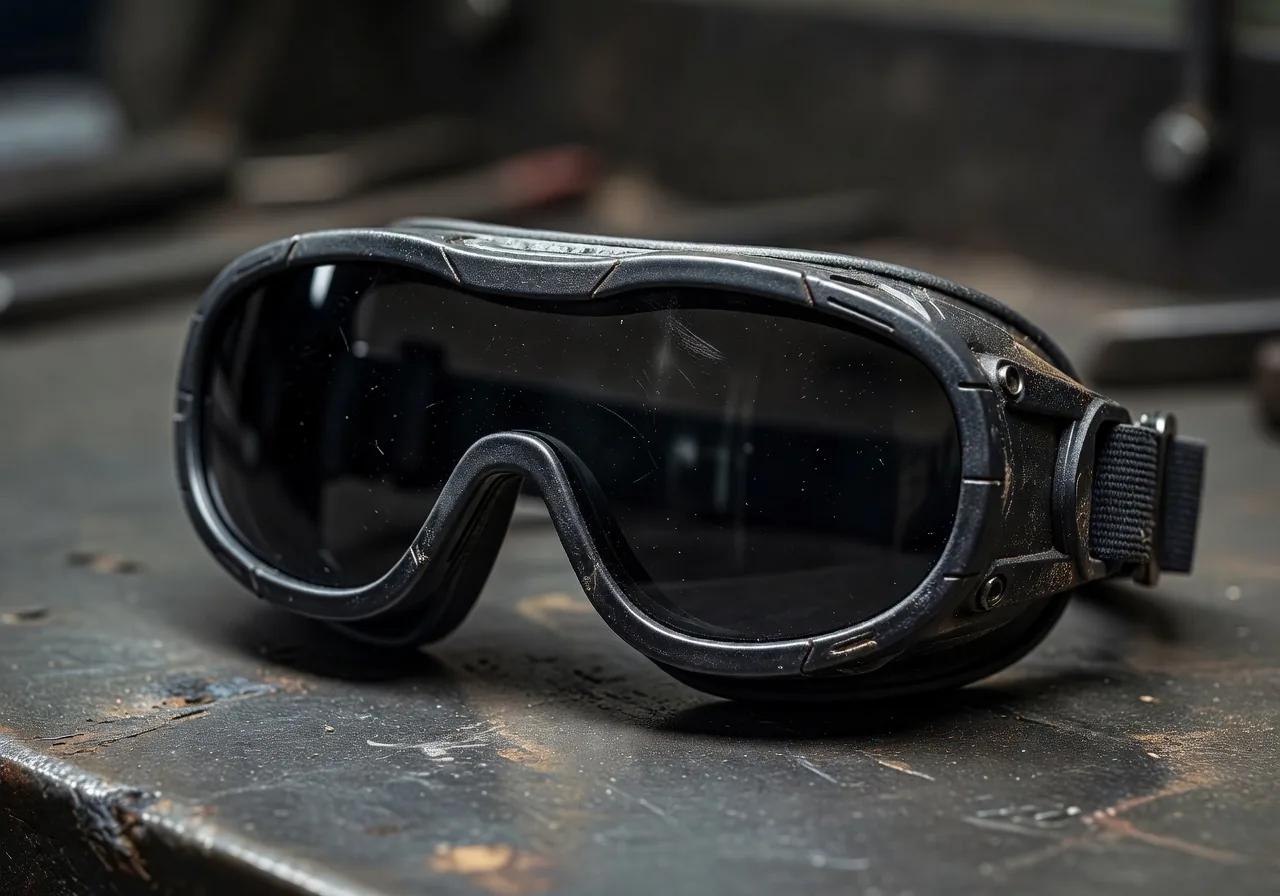
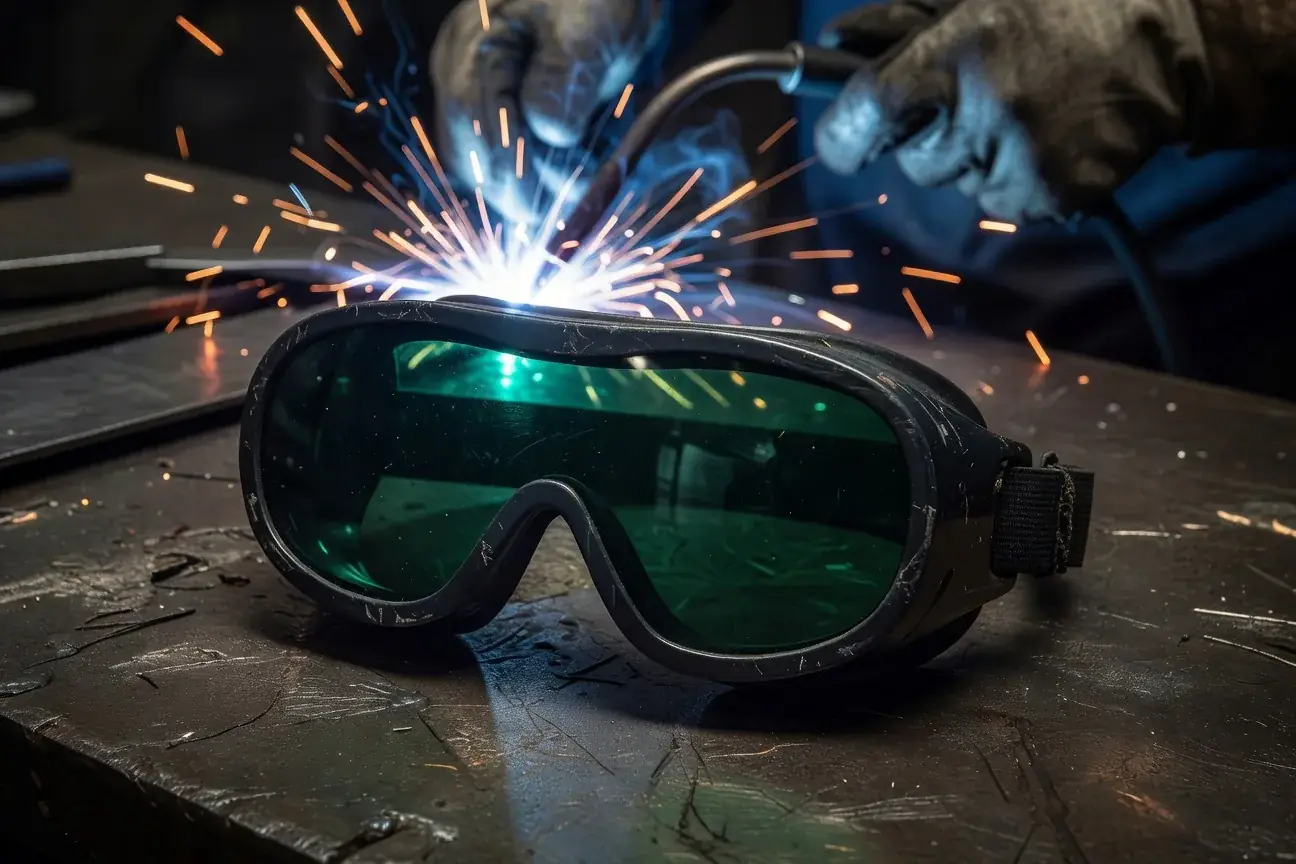
Classic welding goggles showing traditional industrial design

What Is a Welding Helmet?

A welding helmet is a form of personal protective equipment worn during welding, cutting, and related operations. It is designed to shield the face, neck, and eyes from arc radiation, spatter, heat, and debris produced during these processes.

Welding helmets integrate a filter lens — either a fixed-shade lens or an auto-darkening filter — into a head-mounted shell that provides physical coverage of the face and parts of the neck.

  • Protects from arc flash and UV/IR radiation
  • Shields from metal spatter and flying debris
  • Reduces exposure to intense visible light
  • Available in passive and auto-darkening lens configurations

Passive vs. Auto-Darkening Helmets

The two main categories of welding helmets differ primarily in how their filter lenses operate.

Passive vs. Auto-Darkening Helmets

Passive (Fixed Shade) Helmets

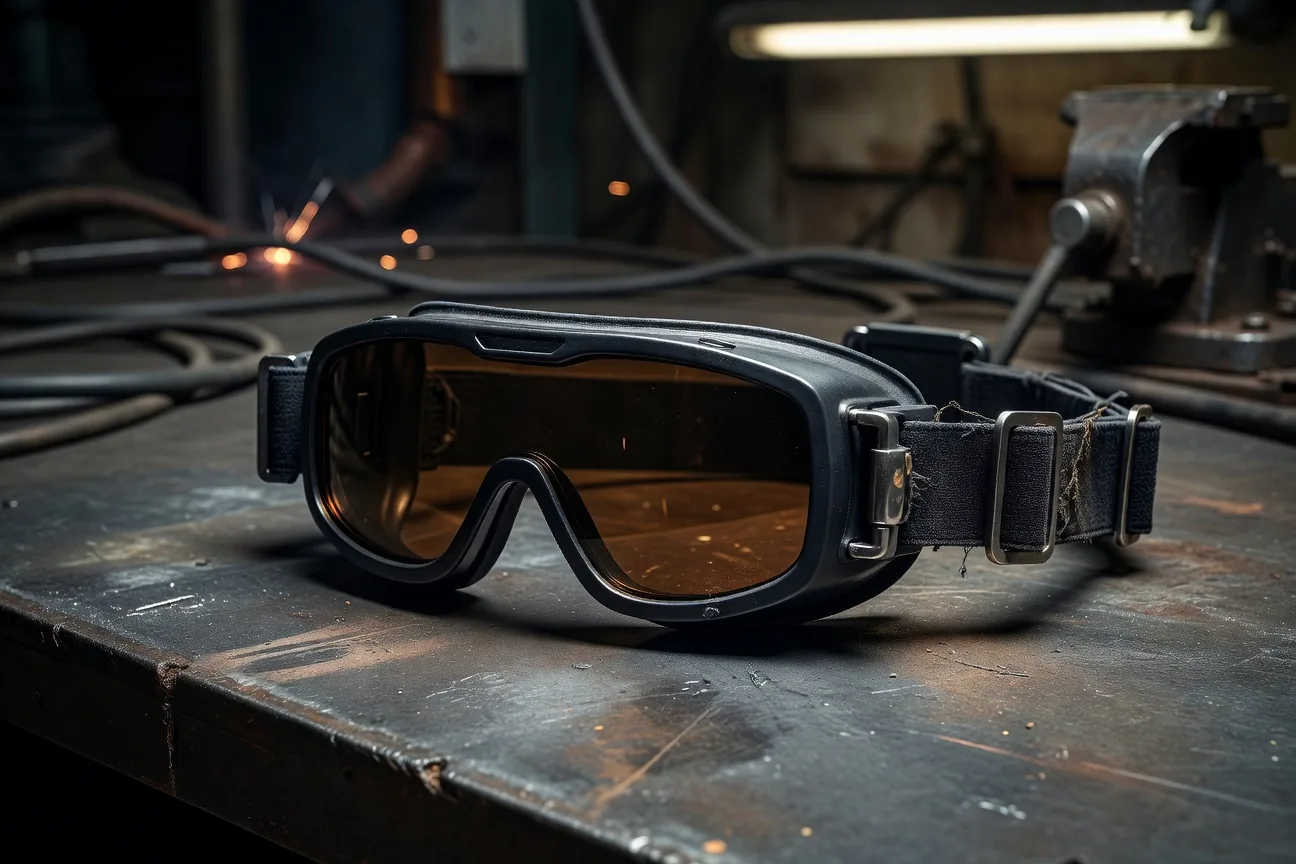
Passive helmets use a fixed-shade filter lens with a predetermined optical density. The shade does not change in response to arc light.

  • Simple, no electronic components
  • Fixed shade number (commonly Shade 10)
  • User must flip visor up/down between welds
  • Generally lower cost than auto-darkening
  • Reliable in various temperature environments

Common Use: Production welding with consistent settings where the same shade is appropriate throughout the task.
Auto-Darkening Helmets

Auto-Darkening Helmets

Auto-darkening filter (ADF) helmets use sensors and liquid crystal technology to automatically darken the lens when an arc is detected.

  • Lens transitions from light to dark state automatically
  • Variable shade range (typically Shade 9–13)
  • Allows positioning without arc flash risk
  • Powered by solar cells and/or batteries
  • Switching speed is a key specification to review

Common Use: Work requiring frequent repositioning or changing between welding processes with different amperage levels.

Key Helmet Specifications Explained

Understanding what helmet specifications mean helps workers and supervisors make more informed equipment decisions.

Specification Description Relevance
Shade Range The range of optical densities available on adjustable helmets Determines which welding processes the helmet suits
Switching Speed How quickly the ADF lens darkens upon arc detection (measured in milliseconds) Faster switching reduces momentary arc exposure
Viewing Area The size of the optical filter window (typically measured in sq. cm or sq. in.) Larger viewing area may improve situational awareness
Optical Class A rating for lens quality covering clarity, diffusion, and uniformity Higher optical class ratings indicate clearer viewing
Sensitivity Control Adjusts how the ADF responds to different light intensities Useful in environments with variable ambient lighting
Delay Control Sets how long the lens stays dark after the arc stops Adjusts based on workpiece cool-down requirements
Shell Material Typically nylon, polypropylene, or composite materials Affects heat resistance, weight, and durability
Headgear System Adjustable ratchet or knob system for sizing and balance Fit and comfort during extended use
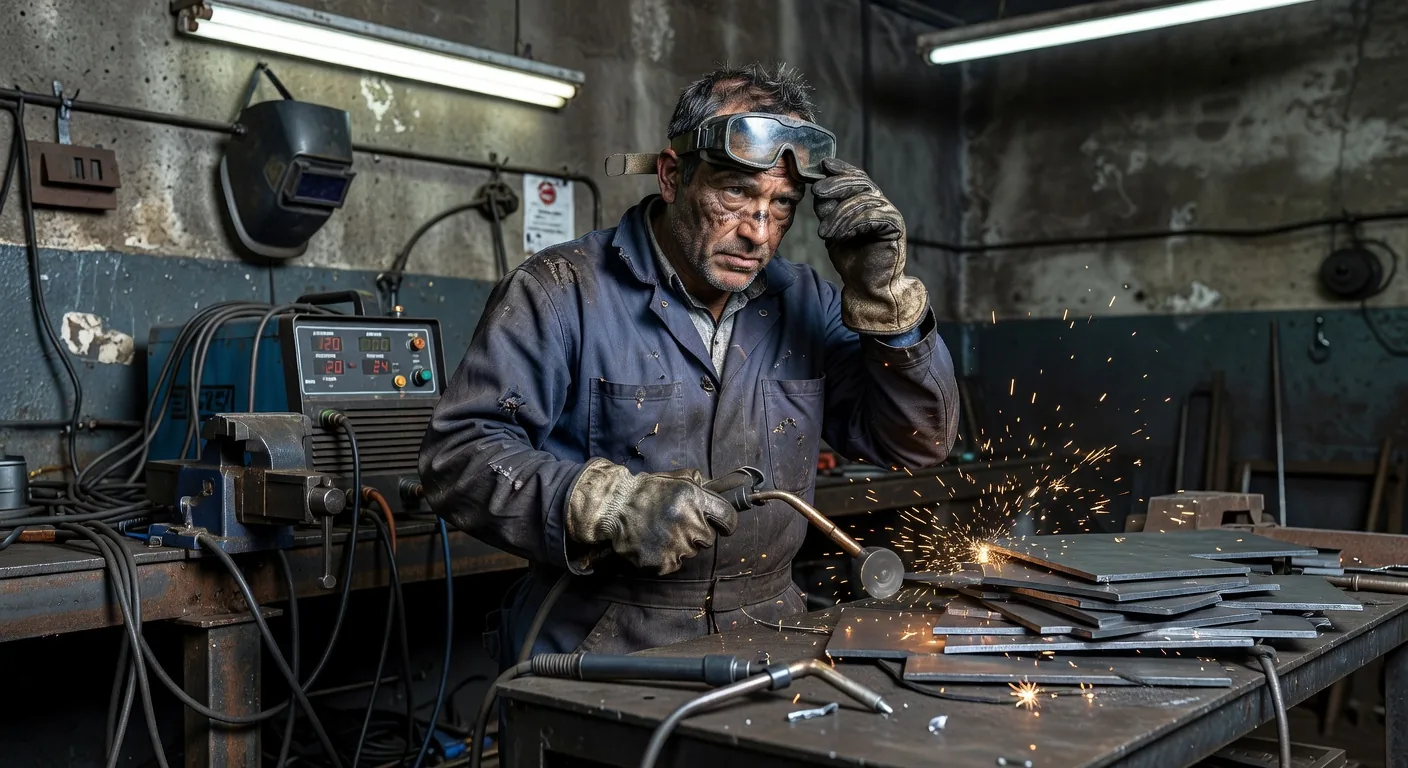
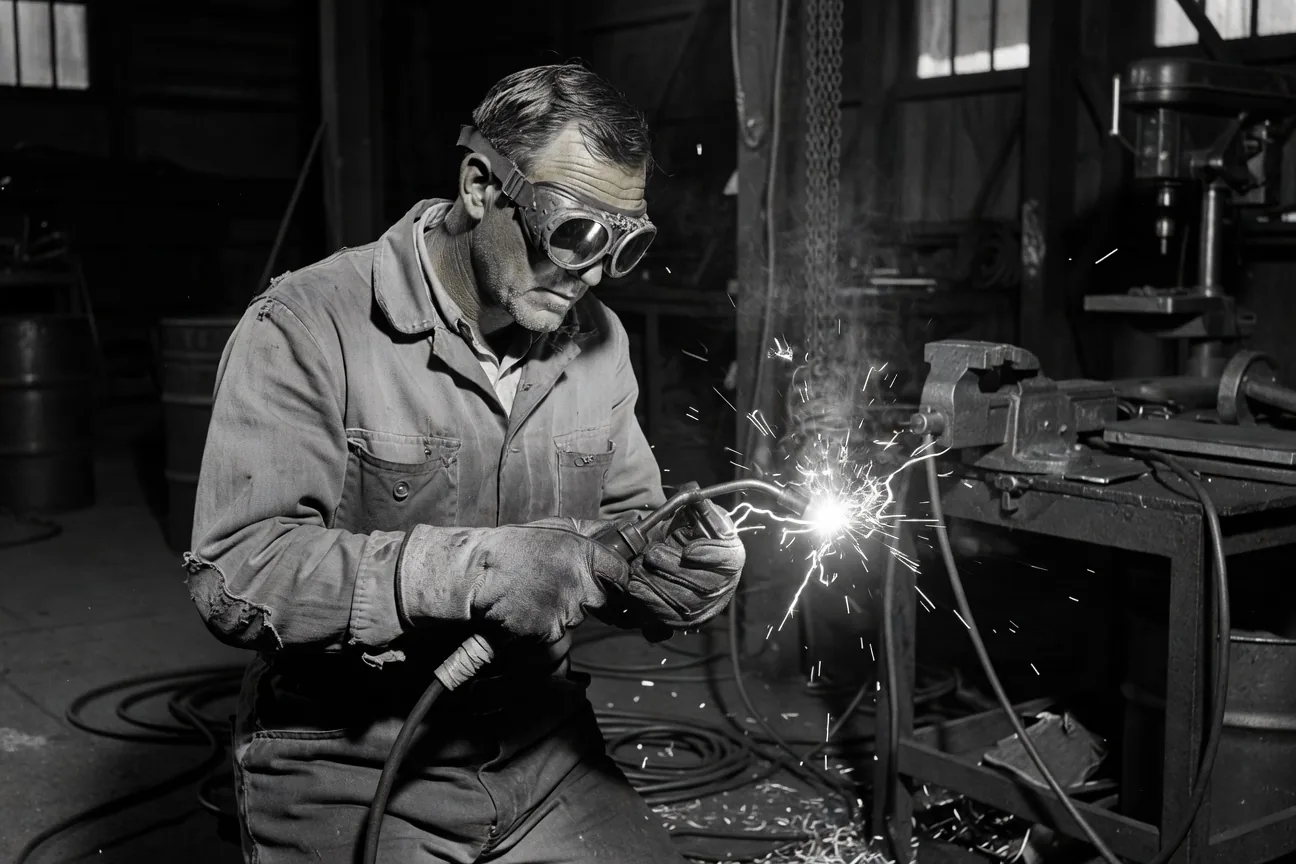
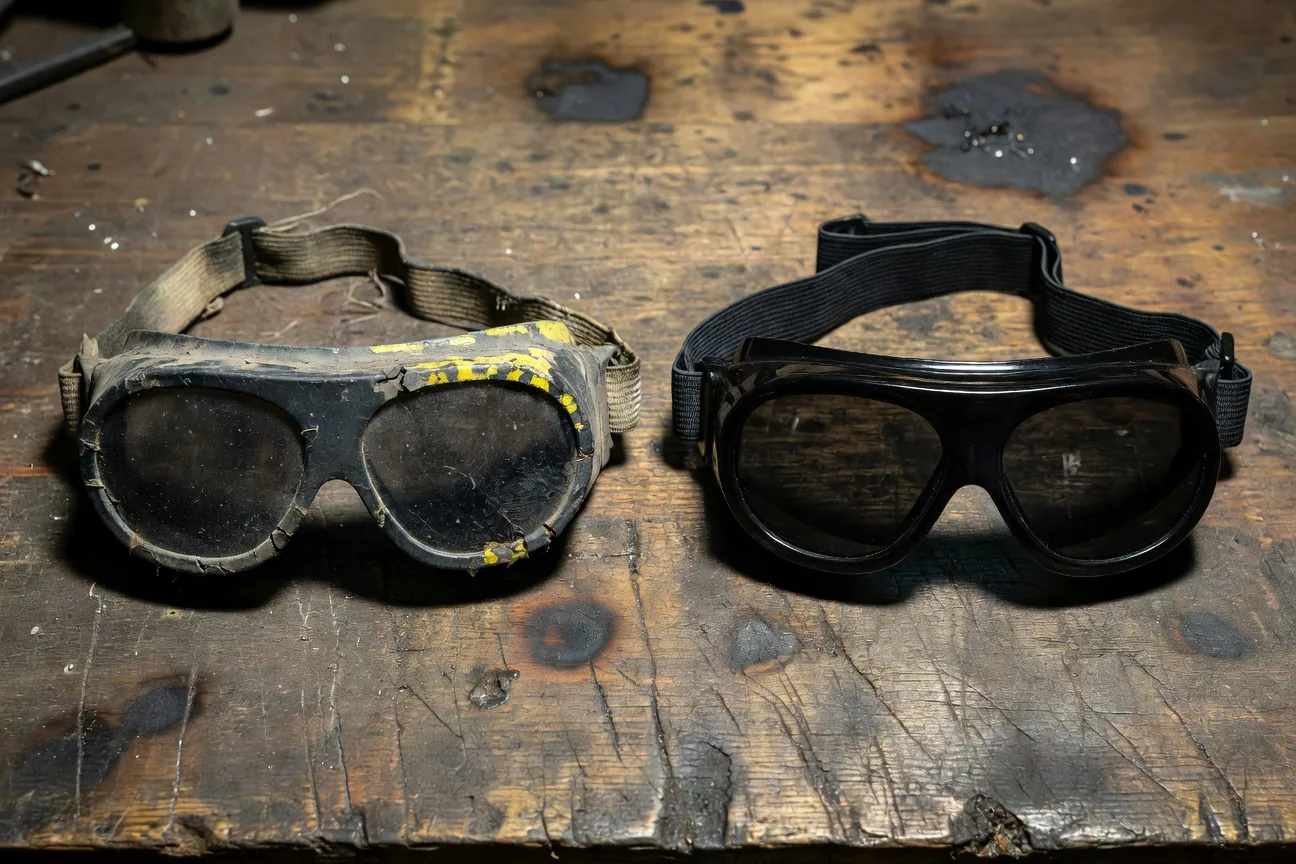
Comparison of older and newer welding goggles designs

How Welding Helmets Have Developed

Welding eye protection has evolved substantially since early industrial applications. Earlier designs used simple tinted glass lenses in rigid frames. Modern helmets incorporate advanced materials and electronic filter systems.

This development reflects growing awareness of eye health in industrial environments and improvements in materials science, optics, and electronics manufacturing.

1

Fixed Glass Filters

Early welding protection used hand-held or mounted tinted glass lenses with fixed shade values.

2

Passive Helmet Designs

Head-mounted helmets with flip-front shells and replaceable filter glass became standard in industrial welding.

3

Auto-Darkening Technology

Liquid crystal display technology enabled lens darkening in response to arc detection, improving usability.

4

Current Developments

Modern helmets offer wider viewing areas, improved optical clarity, solar/battery power, and ergonomic headgear systems.

General Considerations When Choosing a Helmet

These are general educational considerations — always follow workplace safety requirements and consult manufacturer documentation.

General Considerations When Choosing a Helmet

Match to Process

Different welding processes (MIG, TIG, Stick, plasma) may require different shade ranges. Ensure the helmet's shade range covers your common applications.

Match to Process

Weight and Balance

Helmet weight and balance affect neck fatigue during extended sessions. A well-balanced helmet distributes weight more evenly across the headgear system.

Weight and Balance

Viewing Area

A larger viewing area provides more visual information about the weld pool and surrounding work area. Consider the nature of your tasks when evaluating this feature.

📋

Always verify that any helmet you consider complies with applicable safety standards in your region (such as ANSI Z87.1, EN 379, or equivalent) and meets your workplace's PPE requirements.

Explore Related Safety Topics

Learn about protective equipment, workshop safety, and eye protection fundamentals.