Helmet and Goggle Selection
A passive helmet uses a fixed-shade filter lens that does not change in response to light. The user flips the helmet visor up to see clearly and down before striking an arc. An auto-darkening filter (ADF) helmet uses sensors and liquid crystal technology to automatically darken the lens when the arc is detected, then lighten again when the arc stops. Both types are commonly used in welding environments and each has characteristics that may suit different work situations.
Lens shade selection generally depends on the welding process, amperage level, and type of flame or arc involved. Higher-current arc welding processes typically require darker shades (Shade 10–14), while gas welding and brazing usually use lighter shades (Shade 3–8). Reference charts published by safety standards organizations such as ANSI or your regional equivalent provide shade guidelines by process. Always verify recommendations with your workplace safety program and equipment manufacturer documentation.
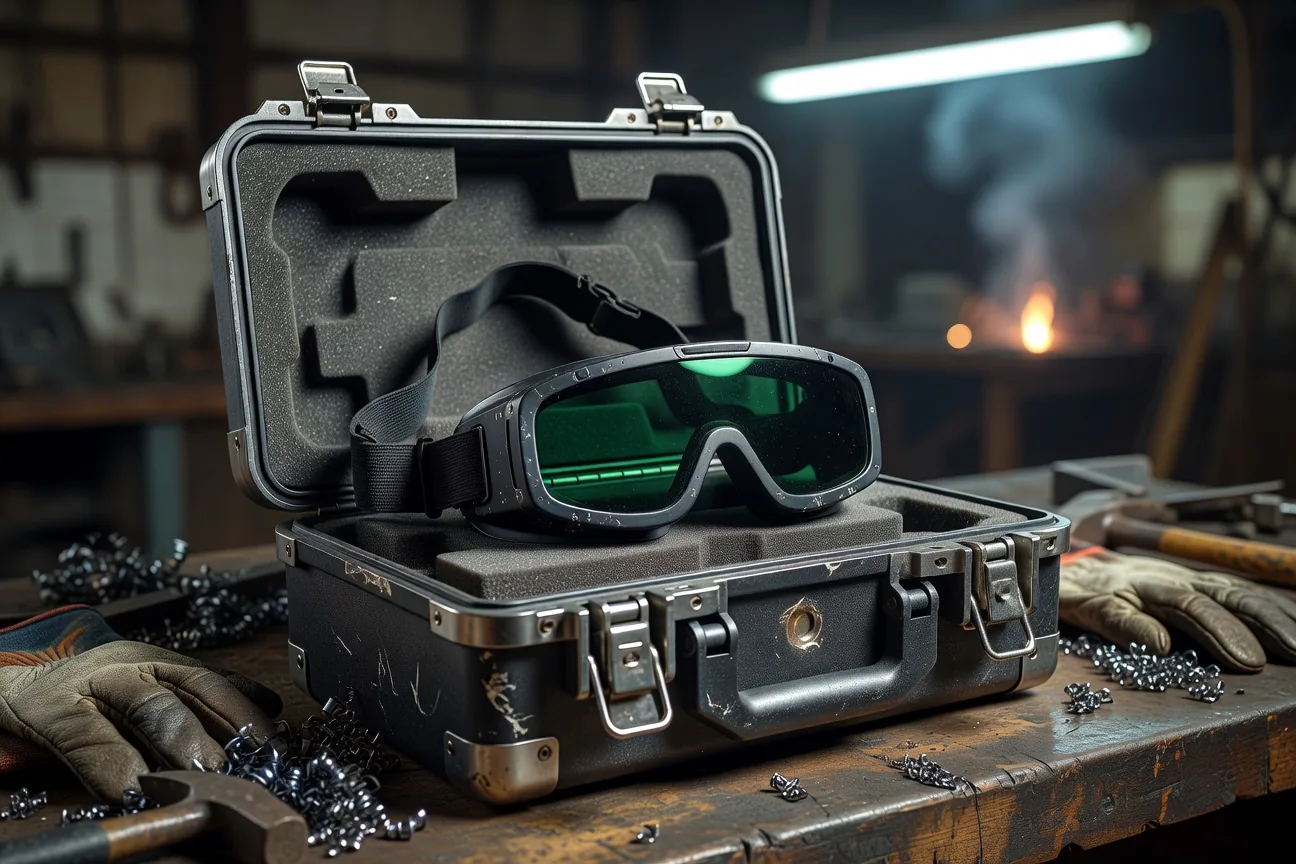
Welding goggles are typically used for gas welding, brazing, cutting, and similar oxy-fuel processes. They provide close-fitting eye coverage with filtered lenses. Welding helmets are generally used for arc welding processes (MIG, TIG, Stick) and provide broader face and neck coverage in addition to eye protection. The appropriate choice depends on the specific welding process, your workplace's safety requirements, and personal fit and comfort factors.
Viewing area size influences how much of the work environment is visible through the lens during welding. A larger viewing area may be helpful for complex joint positions, overhead work, or in environments where spatial awareness is important. A smaller viewing area may be adequate for straightforward flat-position welding. Consider the types of tasks you commonly perform when evaluating this feature.
Optical class is a rating system used in some standards (such as EN 379 in Europe) that describes the optical quality of the welding filter lens. It covers characteristics such as optical clarity, distortion levels, and variation across the lens surface. A higher optical class generally indicates a clearer, more distortion-free viewing experience. The specific rating scale varies by standard — consult manufacturer documentation for interpretation of the ratings on your equipment.
Maintenance and Care
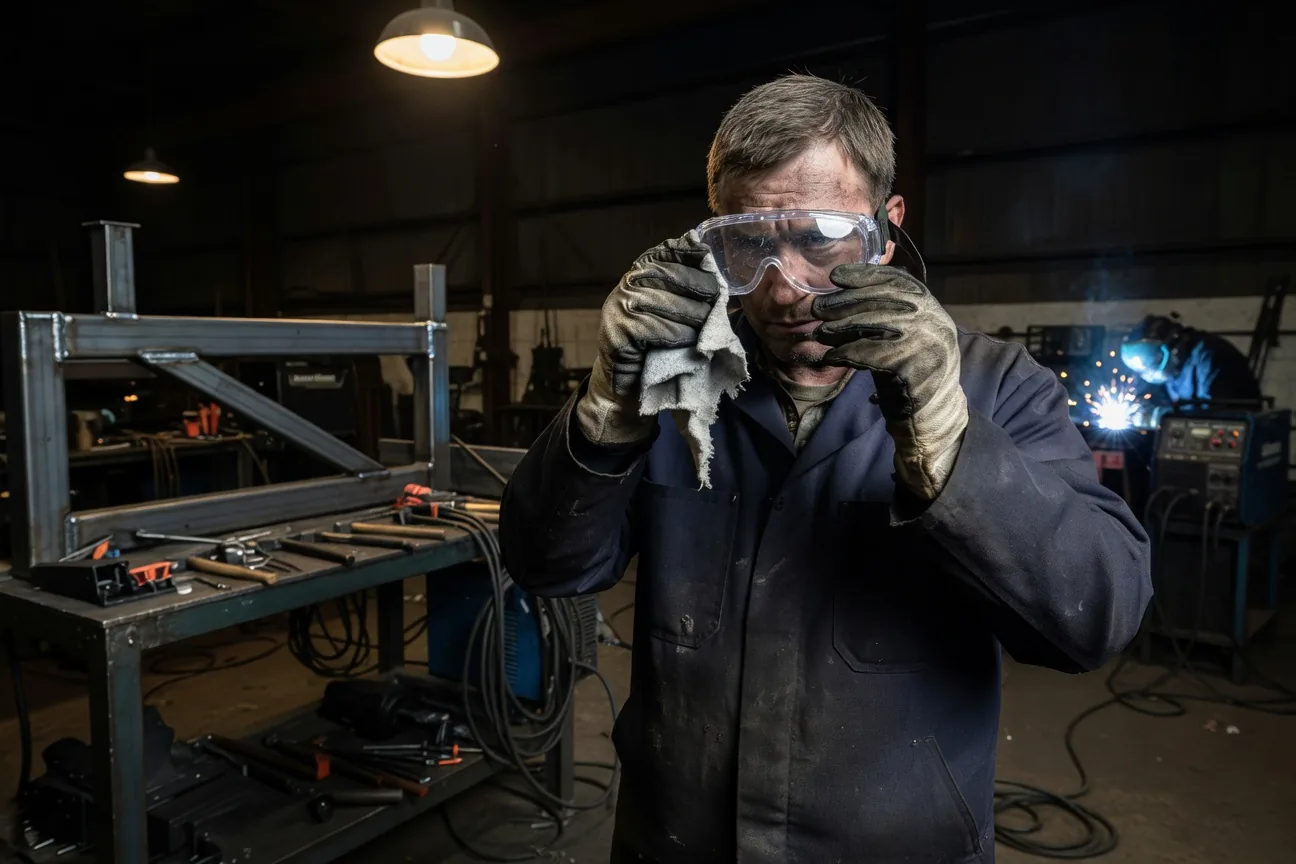
For most lenses, use a soft, clean, lint-free cloth to gently wipe the lens surface. Avoid abrasive cloths or paper towels, which can scratch optical coatings. Some lenses can be cleaned with mild lens cleaning solutions — check your manufacturer's documentation for specific recommendations. Never use solvents or harsh chemicals unless explicitly approved by the manufacturer, as these can damage lens coatings or the auto-darkening filter cartridge.
Fogging typically occurs when warm, moist air contacts a cooler lens surface. Some goggles feature indirect ventilation designs that allow air circulation while minimizing debris ingress, which can help reduce fogging. Anti-fog coatings on lenses may also reduce condensation. Ensuring an appropriate seal without over-tightening can help manage airflow. If significant fogging persists, check whether your goggles have any ventilation adjustment options or consult the manufacturer for guidance.
Lens replacement frequency depends on usage conditions, exposure to spatter, and the degree of scratching or degradation over time. As a general practice, replace lenses when scratches, pitting, or distortion are visible that may affect optical clarity or filter performance. Heavily scratched lenses can reduce optical quality and should not be continued in service. Always inspect lenses before each use and follow manufacturer replacement guidelines.
The cover lens (also called a cover plate or outer plate) is a clear or lightly tinted replaceable lens placed in front of the filter lens. Its purpose is to protect the more expensive filter lens from spatter and physical damage. Cover lenses are designed to be replaced frequently as they accumulate spatter and scratching. Replacing them regularly is more cost-effective than replacing the filter lens itself.
Equipment Fit and Comfort
A properly fitting welding helmet should sit securely on the head without excessive movement during normal work activities, while not creating uncomfortable pressure points. The headgear should distribute the helmet's weight evenly. Most helmets have adjustable ratchet or knob systems that allow sizing for different head dimensions. The helmet shell should not contact the face or nose when the visor is lowered. Spend time adjusting the headgear before extended use to find a comfortable setting.
If helmet weight is causing neck strain, consider reviewing the headgear adjustment — particularly the tilt angle and positioning of the helmet shell relative to the face. A helmet that is positioned too far forward can feel heavier than one balanced closer to the head. Some helmets also offer lighter shell materials. For frequent heavy use, ergonomic headgear systems designed to distribute weight more evenly may improve comfort. Consult your employer's safety equipment selection process for guidance.
Some welding goggle designs are made with extra depth to accommodate prescription glasses worn underneath. These are sometimes referred to as "over-glasses" (OTG) designs. The suitability of a specific goggle model for use over prescription eyewear depends on both the goggle design and the size/shape of the glasses. Check with the manufacturer regarding OTG compatibility before purchasing. Some workers use prescription lens inserts designed for certain goggle or helmet systems as an alternative.
Headgear components such as ratchet mechanisms, sweatbands, and foam padding should be inspected periodically for wear and cleaned according to manufacturer instructions. Sweatbands are typically replaceable and should be changed when they become worn or heavily soiled. Metal adjustment mechanisms should be checked for corrosion or damage. Most manufacturers provide specific care instructions in their product documentation — following these will help maintain the helmet's fit and comfort over time.
Sensitivity control adjusts how the auto-darkening filter (ADF) responds to ambient light levels. In environments with strong background lighting (e.g., working outdoors or near other welding stations), higher sensitivity settings help ensure the lens darkens reliably. Delay control determines how long the lens remains darkened after the arc stops. Longer delay settings may be useful when the workpiece remains bright after welding ends. Refer to your helmet's manual for specific guidance on adjusting these controls.
The answers above are general educational information. For specific guidance relevant to your workplace and equipment, consult your employer's safety documentation, applicable safety standards, and equipment manufacturers.